
INTRODUCTION
There’s something about rolling fresh ingredients into a soft, translucent wrapper that turns a simple meal into a little celebration — the crackle of fresh herbs, the pop of sweet shrimp, and the comforting dip of peanut sauce. Spring Rolls bring people close: kids gather at the counter, everyone grabs a roll and a laugh, and the table fills with the kind of noise that I live for in my kitchen.
I started cooking professionally in Atlanta, running a small catering business that taught me how food shapes occasions — from backyard birthdays to intimate dinner parties. After sixteen years learning the rhythms of menus and the power of simple, bold flavors, I moved my focus to Recipes Vibes full time. As a mom of two and a wife for over twenty years, my kitchen still hums with family life; quick weekday dinners, weekend experiments, and the occasional themed party that becomes a memory. I love following recipes, but I always encourage adding your own twist — a different herb, a toasted nut, or a squeeze of citrus — because that’s where the magic happens. If you want a recipe that’s approachable, adaptable, and perfect for gathering, Spring Rolls are a go-to in my home.
When I teach a group how to make Spring Rolls, I keep things practical and fun: wet the rice paper, layer in vermicelli and protein, tuck in herbs, and roll tight enough to hold together but soft enough to bite through. You can make them hours ahead, or invite guests to build their own as part of the party. If you’ve enjoyed my heart-shaped cinnamon roll post, you’ll find a similar playful spirit here — I even share quick tips for family-friendly variations and storage below, and one of my favorite crowd-pleasing twists is included in the tips that follow. If you want to try a different make-ahead party idea from the blog while your Spring Rolls chill, check out heart-shaped cinnamon rolls for another fun kitchen project.
Why you’ll love this dish
Spring Rolls feel light, bright, and endlessly satisfying — they combine crunchy vegetables, tender vermicelli, and a fresh hit of herbs all wrapped into a portable bite. The balance is what makes them sing: cool herbs and crisp veg against warm shrimp or tofu; a touch of acidity from lime juice; and a creamy, salty-sweet peanut dip to finish. Because each roll is assembled by hand, they invite conversation and creativity, turning meal prep into part of the event rather than a chore.
From my catering days in Atlanta I learned to build dishes that travel well and please a crowd. Spring Rolls are ideal for platters at parties because they look beautiful, hold up for a few hours when kept cool, and you can cater to different diets easily — offer shrimp, sliced chicken, or marinated tofu for vegetarians. The minimalist ingredient list belies the depth of flavor you can coax out by toasting the peanuts for the dip or thinly slicing the vegetables so every bite is evenly textured.
If you’re hosting little ones or picky eaters, Spring Rolls are customizable: set out a variety of fillings and let everyone assemble their favorites. For a fun twist I sometimes turn assembly into a station with printed cards of suggested combinations — a tip I used when I catered neighborhood brunches and a trick that helps new cooks feel confident. And if you want to pair this recipe with another sweet crowd-pleaser, consider making my heart-shaped cinnamon rolls for dessert — they’re a hit at family gatherings and tie the meal together with a homemade touch that guests always appreciate: heart-shaped cinnamon rolls.
How to prepare Spring Rolls
Making Spring Rolls at home is simpler than it looks. The trick is prep: have your vermicelli cooked and cooled, shrimp either hot and sliced or chilled, and herbs washed and dried so the rice paper won’t get soggy. Lay out your work surface with everything within reach and work with one rice paper at a time to keep things neat. When you wet the rice paper, watch it carefully — too long and it gets floppy; too short and it won’t seal. A quick dunk in warm water and a moment to soften is all you need.
I recommend assembling a small sample roll first to gauge how much filling you prefer. Thin layers of vermicelli and veggies let the herbs and shrimp shine, and you can place a sprig of mint or cilantro on top so every bite smells bright. Roll snugly but not so tight that the wrapper tears; press gently as you tuck to create a compact cylinder. If you plan to prep ahead, stack the finished rolls on a tray and cover with a damp towel so they remain pliable — they’ll keep for a few hours refrigerated if not already sauced.
For those who like to streamline, set up an assembly line: one person wets the rice paper, another layers fillings, and a third seals and arranges on the platter. This is how I trained my kids to help — they loved being part of the process and ended up learning knife skills and flavor pairing without fuss. If you want to try a complementary baked or sweet item while the rolls rest, I’ve found guests love a second course that’s warm and comforting; try pairing with a cinnamon roll treat from my collection: heart-shaped cinnamon rolls for a playful dessert.
Ingredients
- Rice paper
- Shrimp
- Vermicelli
- Fresh herbs (like mint and cilantro)
- Peanut dip

Instructions
- Wet the rice paper.
- Fill the rice paper with shrimp, vermicelli, and herbs.
- Roll the paper tightly.
- Serve with peanut dip.
How to serve this dish
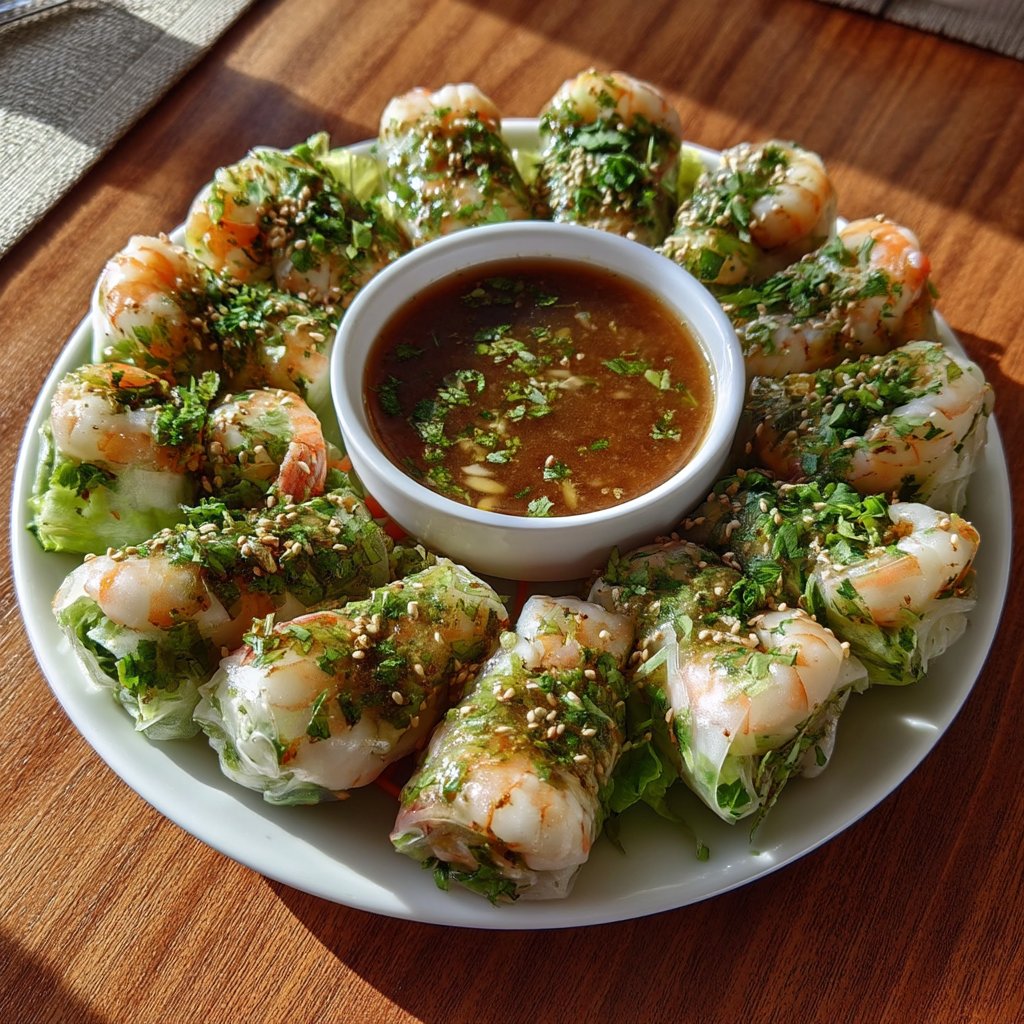
How to serve this dish is all about presentation and offering dips that invite mixing and matching. Arrange Spring Rolls on a large platter with a bowl of peanut dip in the center and small plates for guests. Garnish with lime wedges, extra herbs, and thinly sliced chilies for heat. The visual contrast of the translucent wrappers, bright herbs, and pink shrimp is always a crowd-pleaser, and the platter format encourages passing and sharing, exactly the kind of togetherness I encourage in my kitchen.
Serve them cold or at room temperature; they’re perfect as an appetizer or as part of a composed meal paired with a green salad or a noodle bowl. For a more substantial spread, offer several dips — a sweet-chili sauce, hoisin with crushed peanuts, and the classic peanut dip — so guests can explore different flavor profiles. If you’re hosting children, make a small bowl with mild soy-lime dressing so younger palates can enjoy without intense spice.
In a casual family setting, make Spring Rolls a do-it-yourself dinner: set a station with all the fillings and let everyone build their own. Kids especially love this interactive approach and it makes clean-up easier because each person handles their own plate. For a plated dinner, lay two rolls per person, slice one in half on the diagonal to show the filling, and add a simple bed of mixed greens dressed lightly with lime vinaigrette. When I cater small gatherings, this is a reliable way to balance elegance with hands-on fun.
How to store it properly
Storing Spring Rolls the right way preserves texture and flavor. Once rolled, place them seam-side down on a tray lined with parchment and cover with a slightly damp kitchen towel to keep the wrappers from drying out. If you need to refrigerate for longer than a couple of hours, wrap each roll loosely in plastic wrap to prevent sticking and moisture loss; stacked in an airtight container, they’ll keep in the fridge for up to 24 hours, though best when eaten the same day.
Avoid freezing Spring Rolls — the rice paper becomes brittle and the veggies can lose their crunch upon thawing. If you anticipate leftovers, store the components separately: cook the vermicelli and shrimp, wash and dry the herbs and vegetables, and keep the peanut dip in a sealed jar. Reassemble just before serving to retain the freshest texture. Reheated peanut sauce tastes even better the next day after the flavors meld, so make extra if you like reheating for lunches.
When transporting for a picnic or potluck, layer the rolls between sheets of parchment in a shallow cooler with ice packs beneath the container (not directly touching the rolls) to keep them cool. Label any containers if you’re juggling multiple dishes for a gathering — my catering rule: clear labeling saves hands and confusion at the buffet. For longer storage tips and make-ahead tricks that work well for family gatherings, check out my simple guides on prepping components ahead of time: heart-shaped cinnamon rolls for a dessert prep pairing idea.
Emma’s Kitchen Tips
From my years catering in Atlanta and feeding my own busy household, I’ve learned a few practical hacks that make Spring Rolls easier and more delicious. First, dry your herbs well — water is the enemy of a firm roll. Use a salad spinner or pat them dry with paper towels before assembly. Second, slice vegetables thin against the bias so they tuck neatly and don’t poke through the rice paper. Third, chill cooked shrimp or chicken before adding them; warm proteins can make rice paper sticky and harder to handle.
I always toast peanuts for the dip — it takes minutes and gives the sauce a nutty depth that’s worth every second. For a stronger flavor, add a splash of fish sauce to the peanut dip and a squeeze of lime to brighten it. If you want to speed up assembly for a crowd, pre-roll some plain rice paper-wrapped veg bundles and provide small plates of herbs and proteins for guests to top as they like. This hybrid approach cuts prep time and still feels interactive.
For a family-friendly twist, swap shrimp for thinly sliced roast chicken or marinated tempeh. My kids adore a mango-sweet version with shredded carrot and mango slices — it adds a playful sweetness that balances the savory dip. If you’re preparing these with kids, give them a “build card” with simple instructions and let them choose two fillings and one herb. Practical, hands-on cooking lessons like this were staples in my catering workshops and later became fun rituals at home.
Make it your own
Make it your own by experimenting with fillings, wrappers, and dips. Use butter lettuce instead of rice paper to create a lettuce wrap version that’s even quicker to assemble. Try soba noodles in place of vermicelli for a heartier texture, or add roasted sweet potato for a seasonal twist. For a smoky element, grill the shrimp or marinate tofu in a little smoked paprika before pan-searing. The key is to respect balance: crunchy, soft, fresh, and savory all in one bite.
Swap herbs to change the flavor profile: basil gives a Thai note, while cilantro leans more Vietnamese. Add pickled vegetables for tang and to cut through richness. Consider a citrus-forward dipping sauce for summer, or a warmed almond butter dip for cooler months. When entertaining, label each roll type and include a small card describing the ingredients — it’s a small touch that helps those with dietary restrictions and adds a professional feel, a habit I carried over from my catering days.
Finally, use Spring Rolls as a template for themed parties. Create a “Mediterranean roll” with hummus, roasted peppers, and parsley; or an “Asian BBQ roll” with charred pork and scallions. Let your guests mix and match and celebrate the joy of making food together. For a cozy dessert pairing, finish the meal with a sweet, shareable pastry like the heart-shaped cinnamon treats I love to make for family gatherings: heart-shaped cinnamon rolls.
Frequently asked questions
Q: How long do Spring Rolls last in the fridge?
A: Spring Rolls stored properly will keep in the refrigerator for up to 24 hours, though I recommend eating them the same day for the best texture. Place each roll seam-side down on a tray with a damp towel covering them to prevent drying. For longer storage, keep components separate and assemble just before serving to maintain crisp vegetables and tender rice paper.
Q: Can I make vegetarian or vegan Spring Rolls?
A: Absolutely. Swap shrimp or chicken for marinated tofu, tempeh, or simply load up with roasted vegetables and avocado. Use a vegan peanut dip or a soy-lime dressing in place of fish-sauce-based sauces. Herbs and a hit of citrus are your best friends for adding brightness and balancing richness without animal proteins.
Q: What’s the best way to keep the rice paper from tearing?
A: Avoid over-soaking the rice paper. Dip it briefly in warm water — just until it softens — and lay it flat. Work on a tidy surface and avoid overfilling; a modest amount of vermicelli and a few herb sprigs make rolling easier. Press gently as you fold and roll, keeping the seam tucked under the finished roll to help it stay sealed.
Q: Can I freeze Spring Rolls?
A: I don’t recommend freezing finished Spring Rolls. The rice paper will become brittle and the vegetables often lose their crunch. If you need to prepare ahead, freeze components like cooked proteins and roasted vegetables, then defrost and assemble the rolls the day you serve them.
Conclusion
If you’d like another fresh take on roll-style appetizers, this Fresh Spring Rolls recipe from Tastes Better From Scratch is a wonderful reference for additional ideas and variations.